Packaging Insights
5 Surface Finishing Techniques for Cosmetic Glass Bottles
Understand the visual character, best applications and production considerations of coating, frosting, screen printing, hot stamping and metallization.
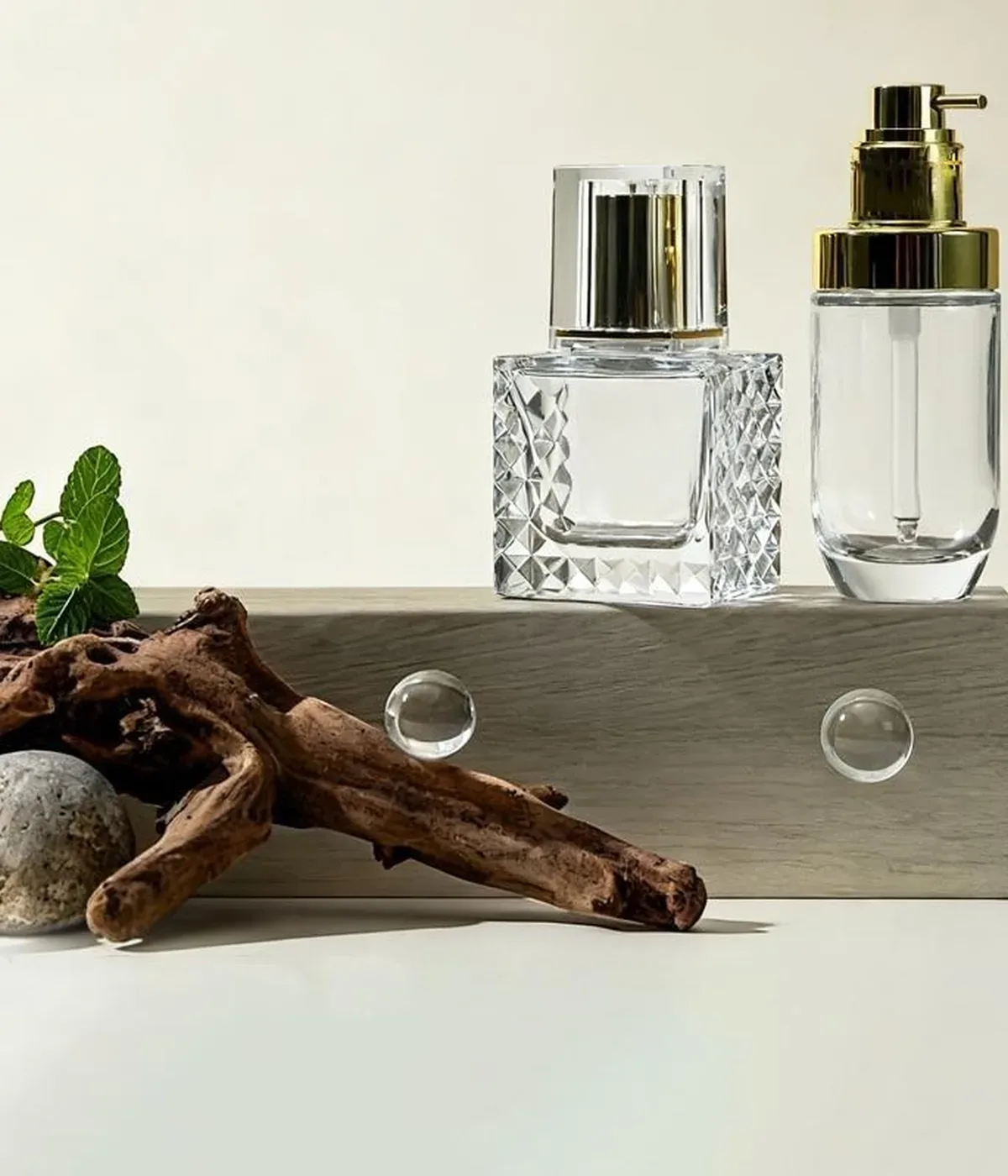
Surface finishing defines the colour, tactility and shelf presence of a cosmetic glass bottle. The right process balances brand expression with formula environment, order volume and durability requirements.
1. Colour coating
Coating creates transparent tints, solid colours, gradients and selective effects. It is ideal for establishing a consistent brand colour. Production controls should cover colour tolerance, film thickness, adhesion and alcohol resistance.
2. Frosting
Frosting gives glass a soft, diffused appearance and refined hand feel. It may be achieved through chemical etching or a sprayed effect. Pay attention to registration between frosted areas, clear windows and printed graphics.
3. Silk screen printing
Screen printing works well for logos, regulatory copy and opaque colour blocks. Line weight, halftones and changes in bottle curvature all influence final clarity and should be evaluated on the actual container.
4. Hot stamping
Hot stamping adds a precise metallic highlight, often used for logos and limited-edition details. Select a foil compatible with the underlying coating, then test edge definition and abrasion resistance.
5. Metallization
Metallization creates a mirror-like metallic finish on caps, collars or selected decorative parts. Substrate smoothness, colour consistency and the intended recycling strategy should be considered early.
A robust decoration programme usually validates each process separately before combining finishes. This controls cost and reveals colour, adhesion and registration risks before mass production.